Use cases

Robotics is the proving ground.

High stakes, scarce clean data, decisions that must be right — robotic perception and control is where confidence-gated autonomy proves its worth first.

Watchout Inc. · Robotic part-picking

Knowing when a grasp is safe to attempt

A find-grip-pose activity turns camera and depth signals into a belief about whether a proposed grasp will hold. The agent only commits when calibrated confidence clears the demanded threshold — and surfaces uncertain cases instead of risking a drop.

P ≥ θ
gate before every grasp
causal
physics-aware grip model
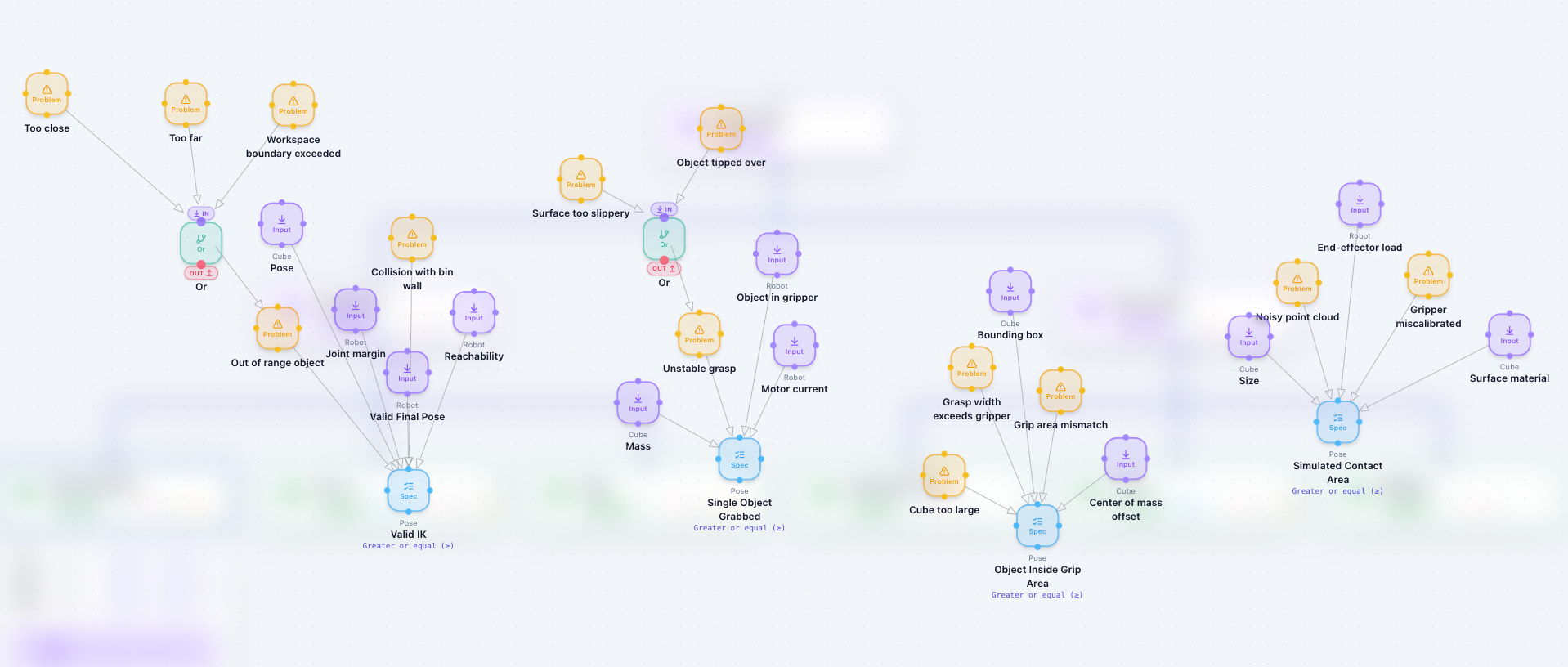
Find Grip Pose · causal model
Find Grip Pose causal model — graph of physical signals and specifications
ARD Canada Inc.

Reasoning-driven robotic control

Demonstrators where agents reason about physical constraints to drive control decisions — not just classify a scene, but decide how to act within it, and know how confident that decision is.

Beyond robotics

Any high-stakes, low-data decision

The same foundation — causal models, calibrated confidence, gated action — applies wherever expert judgment matters and clean training data is scarce. Tell us where yours lives.

The common pattern

A decision too important to get wrong, with too little data to brute-force.

1

Experts already know the rules — they're just not written down as a model.

2

The cost of a wrong action is high, so you need a guarantee before acting.

3

Confidence gating lets agents act autonomously where they're sure, and escalate where they're not.

Where does your hardest decision live?

Bring us a high-stakes, low-data problem and we'll show you what gated autonomy looks like on it.